Monday, 9 January 2017

Agricultural Products

Exports of Agricultural Products

INTRODUCTION
India has now entered a new era of globalisation and economic liberalization. The possibilities of increased trade in the global markets demand that the country becomes efficient, competitive and innovative both in production and marketing. It is time that we stopped being preoccupied only with increasing production: attention to marketing is equally important. In fact, it is worth remembering that marketing is as critical an input for production as are seeds, irrigation, fertilizer, etc.
The agricultural marketing scenario in the country is fast changing and will need to be restructured and reoriented to fully meet the need arising from the globalization process. The areas where new initiatives and measures are required need to be identified and attended to. Much smaller countries, by adopting strong and effective marketing strategies, have been able to export to competitive areas and thus have not only strengthened their economic position but have also contributed to the general welfare of the farming community of these countries. India needs to emulate such countries and adopt effective and aggressive marketing policies so lt has its export of agricultural commodities is enhanced.
The importance of an efficient agricultural marketing system has been recognized in India since long. The setting up of a central organization, known as the “Office of the agricultural marketing Adviser to the Government of India” in 1935, was the first step taken by the government to bring about an integrated development of marketing of agricultural produce with a view to safeguarding the economic interests of producer-sellers as well as consumers. Over the years, a number of organizations and institutions have come to be established with a mandate for one or more areas of marketing such as procurement, storage, and warehousing, credit, cooperative marketing, exports, food processing, agricultural prices, agricultural produce markets, research and agricultural statistics. As a result, agricultural marketing responsibilities Today are diffused among several departments and agencies, which often tend to work in isolation without coordinating their activities and programmes.
In the farm sector, marketing has been receiving a lower priority than production, there was a tendency to be preoccupied with increasing production without a matching concern to improve and strengthen marketing. The governments investment in agricultural marketing has been an insignificant proportion of the total investment in agriculture and allied sectors at the central and state levels, even though the potential contribution which an efficient marketing can make to the overall development of the farm sector has been realized.
The basic purpose of this paper is to develop a micro perspective of the export performance of agro-food products from developing countries in order to understand the dynamics of international marketing by agribusiness firms. It is emphasized that the micro issues bear greater influence on the export performance because new developments in international food and agri-business markets are responsible for making defunct the macro generalizations about consumer behavior towards food and food products.

AGRICULTURAL MARKETING IN INDIA

Agriculture is the mainstay of the Indian economy and represents one- third of the country GDP. During the last four decades, it received a very high priority. There are 35 agro-climatic regions in the country with wide variations in agricultural production patterns and practices. The application of scientific techniques, coupled with government policies and programmes in the agricultural sector, has helped in increasing the production of several commodities including foodgrains and the resultant marketable surplus has touched new heights, transforming Indian agriculture from subsistence to a near commercial enterprise. The production of foodgrains during 1994-95 is expected to touch an all-time high of 185 million tonnes, which are 3 million tonnes more than the production during the previous year. Foodgrains production during 1965-66 was a mere 72 million tonnes. Sugarcane production is likely to it is to 245 million tonnes in 1994-95 against 233 million tonnes in 1993-94 compared to 120 million tonnes in 1965-66. Production of oilseeds almost tripled from 6.35 million tonnes in 1965-66 to 19.2 million tonnes in 1992-93. Production of kharif oilseeds alone was estimated at 12 million tonnes during 1993-94. Production increase in the case of fibres such as cotton, jute and Mesta was also witnessed. So also in the case of fruits and vegetables.
Agricultural marketing is broadly concerned with developing new products to satisfy emerging needs of the consumers and to capitalize on newly identified market opportunities. It also includes reappraising and modifying existing products in the perspective of changing requirements of the modern society.
In India, much of the agricultural produce freely moves through private trade operating in the organized markets as well as through shanty markets and village fairs where the head loaders and peddlers sell their produce. Apart from modern marketing, the country scene is also marked by traditional barter system. Realizing its limited but vital role, the Government has been endeavoring to promote organized marketing of agricultural commodities in the country. To achieve these objectives, most of the states and union territories have enacted necessary legislation governing agricultural produce markets. The number of regulated markets in the country has increased from 2,481 in December 1978 to 6,772 in March 1993. During the last two decades, marketing of farm produce is also encouraged through a network of cooperative society.
EXPORTS AGRICULTURAL PRODUCTS
World trade in agricultural products I estimated to be about US $ 300 billion in value. Within this overall trade, it is estimated that about 22 percent consists of bulk commodities ( creals, soybeans, unmanufactured tobacco, cotton, plant seeds and pulses), while 24 per cent consists of principally semi-processed products ( Wheat flour, feeds and fodders, hops, oil meals vegetable oils, refined sugar, live animals, etc.). The remaining products which dominate world trade in agricultural commodities and account for about 53 per cent of the total are consumer- oriented products, i.e., products that require little or no additional processing for consumption. These include fresh and processed horticultural products, fresh and processed meat and dairy products, table eggs and bakery products. The fastest growth in world trade is in consumer products.
India’s share in the global trade has declined in the recent decades. The share of agricultural exports in the total exports of India has also come down India’s share in world trade in agricultural commodities is less than one per cent. The agricultural sector contributes amount 30 per cent of the GDP, but the contribution to exports which at one time accounted for nearly 31 per cent of all exports (1980-81) has come down to 11 per cent (1991-92). The decline of agricultural exports as percentage of India’s total exports reflects partly a diversification in the Indian economy.

Monday, 26 December 2016

Castor Oil


PURPOSE
        The castor oil pack has many applications, and is being used as part of your detoxification program to facilitate deep cleaning and to assist the detoxification of your body. Other conditions that respond well include: headaches, liver disorders, constipation, intestinal disorders, gallbladder inflammation or stones and conditions with poor elimination. It is specific in cases of uterine fibroids and ovarian cysts that are non-malignant.
Castor Oil has been used throughout the ages as a natural therapy. Castor oil applied externally in the form of “packs” is very popular with natural health practitioners. Some people have said it has helped to improve assimilation, eliminations and circulation… especially of the lymphatic system.
castor oil pack is made from several layers of wool flannel material, enough to absorb and hold the castor oil during application.
A common area to apply the castor oil pack is on the right side of the abdomen, between the upper part of the rib cage and the upper edge of the hipbone. Another common area is across the abdomen from the right to the left side of the body, covering from the sternum to the pubic or groin area. Other people have tried it on areas of pain such as arthritis pain, torn ligament, frozen shoulder, etc.
WHAT YOU NEED
  • Cold-Pressed Castor Oil: Available in an 8 oz., pint, quart, or gallon size. I don’t like to buy a large amount of castor oil because I like it to be fresh & not old (rancid oil). Small amounts of castor oil should be added to the pack before each use to refresh it.
  • Wool Flannel: Found at many health food stores. Wool holds heat really well but if you’re sensitive to wool, silk is another good choice because it also holds in the heat. I wouldn’t use cotton unless for some reason I had nothing else because it doesn’t hold the heat in well.  
  • Hot Water Bottle or Buckwheat Pillow: Placed on top of the castor oil pack to keep it warm during application. I don’t like using a heating pad because it gives off too much electromagnetic radiation (EMF).
  • Plastic bag & large old towel.
HOW TO USE A CASTOR OIL PACK
  • Fold the wool flannel into 2-3 layers.  Add castor oil to the flannel a little at a time, saturating all three layers, but not so much that it drips from the flannel. DO NOT cook oil to warm it.
  • Protect your hot water bottle by placing plastic wrap on top of it (or put it in a plastic bag).  If using heating pad, turn to “low” heat.  
  • Place flannel on top of the hot water bottle. Let sit for 1-3 minutes or until oil is warm.  
  • Place large old towel across where you’re going to lie.  
  • When you are ready to begin, flip the castor oil pack and hot water bottle on to your abdominal area so the flannel is against your skin.  Fold ends of towel over hot water bottle and relax. If desired, fasten towel snugly with large safety pins.
Application is usually 1 to 2 hours. Consult your health care practitioner to determine frequency of application. If using Castor Oil Pack at bedtime, take heat off after 2 hours. You can use the same castor oil pack for additional applications.
HOW TO STORE THE CASTOR OIL PACK
It’s best to store the castor oil pack in a storage container between uses and store it in the freezer (or refrigerator) so it doesn’t get moldy. Be sure to keep the pack out of the sun and in a cool dark place. Discard the pack if it becomes rancid.  `
*Always seek medical advice prior to use. Do NOT use during pregnancy or during menstrual flow.

SPICES AGRIBUSINESS

We have the domain knowledge in each business segments we have clubbed for smooth execution and offering the best service at par with the competitive environment. Spices fall under Agribusiness Segment. We hereby offer a Historical Importance of Spices, the importance of India in Spice Trade and the evolution and acceptance of Masalas by various regions of the world. Frankly, India has the best source of creative pulse in spice blending to make each cuisine taste differently and unique by creative [minor/major] blending and adjustment thereof.
SPICES
  • Pepper
  • chillies[Red,/Green]
  • Ginger
  • Turmeric
  • Cumin
  • Fenugreek
  • Garlic
  • Nutmeg
  • Mace
  • Vanilla
  • Curry-powder
  • Mint-products
  • Spice-oils/oleoresins
  • Cinnamon
  • Cloves


Indians are the most creative people to make wonderful mixture of spices to create new recipe for the food preparation and it appeared exotic for the explorers in the olden age and the modern age too. Today-most of the spices are grown organically in India with less pesticide and less fertilizers and stand a legacy in the 21st century. Those who understand spices-understand India better.
Even today, India is the leader in the Global Spice Market. No country in the world produces the amount of spices -India does around 2.75 million tones of different spices, valued approx usd.4.2 billion a year. Due to the varying climates in India -from tropical to sub-tropical almost all spices are grown in this country. South India is a major area of Spice Growth. However almost in all the states, & Union Territories of India, at least one spices is grown in abundance. Garlic, Ginger and Caraway seeds come from North India, while, Fenugreek and Red-Chilies and Fennel Seeds come from West India. East India is abundant with Garlic Turmeric and Large Cardamom. South India is known for Cardamom, Mace, Cinnamon, Clove, Pepper, and even Vanilla. The spice of the reason eventually becomes the chief flavoring of the food in the-area.
SPICES, however are not a cash crop for India. They are a culinary necessity and prevalent in the n entire country’s eating habits. Any Indian market is incomplete without its SPICES section. Stalls, shops and even whole streets are devoted to SPICES, because Indian Food is so SPICES centric. Although in India, we don’t realise the relevance of it in the World History, we know we would be crippled without it. SPICES in India are not just restricted to culinary delight. They have an important part, in the cultural and medicinal world too. Ginger prevents Dyspepsia, Garlic reduces Cholesterol and Hypertension and people often serves it as Antihistamine. Turmeric one of the important spices in India’s used for its Antiseptic Qualities for internal and external injuries in the body. It’s for these qualities that Turmeric is said to be a natural Cosmetic .Entire wedding ceremonies are constructed around Turmeric, where young Brides are grooms are made to cover themselves in Turmeric Paste ‘to be cleansed’!
Although everyone in India uses spices in their daily cooking, some spices are considered more posh than others. From the Indian State of Kashmir comes the world’s most expensive Spice Saffron. One gram of saffron requires the stigmata of 1500 flowers. It’s Spice so dear to Indians, that its vibrant color is represented in Indian Flag. Used not only for its bold color, but also its strong flavor .It’s used in only the richest delicacies and in times of celebration. Nutmeg and Cardamom are other such spices that are used on special occasions and in moderation.
A ‘HOT’ DISCOVERY!!
Archaeologists estimate that from as far back as 50,000 B .C humans had used the special qualities of aromatic plants to help flavor their food. Primitive man used sweet-smelling spices in order to make the raw meat edible. Herbs probably were used as medicine too and also play a part in nature worship. It was from that moment that spices played an
Important role in the function of human life.
India’s bio diversity ensures variety of Produces in different natural produce categories. In Bulk shipments, Varsha Industries can ensure consistency in the supply of Dehydrated ProductsDesiccated coconutEdible OilGrainsSpiceOil Seeds, & OTHER MERCHANDISES AT THE MOST COMPETITIVE RATES.

Friday, 4 March 2016

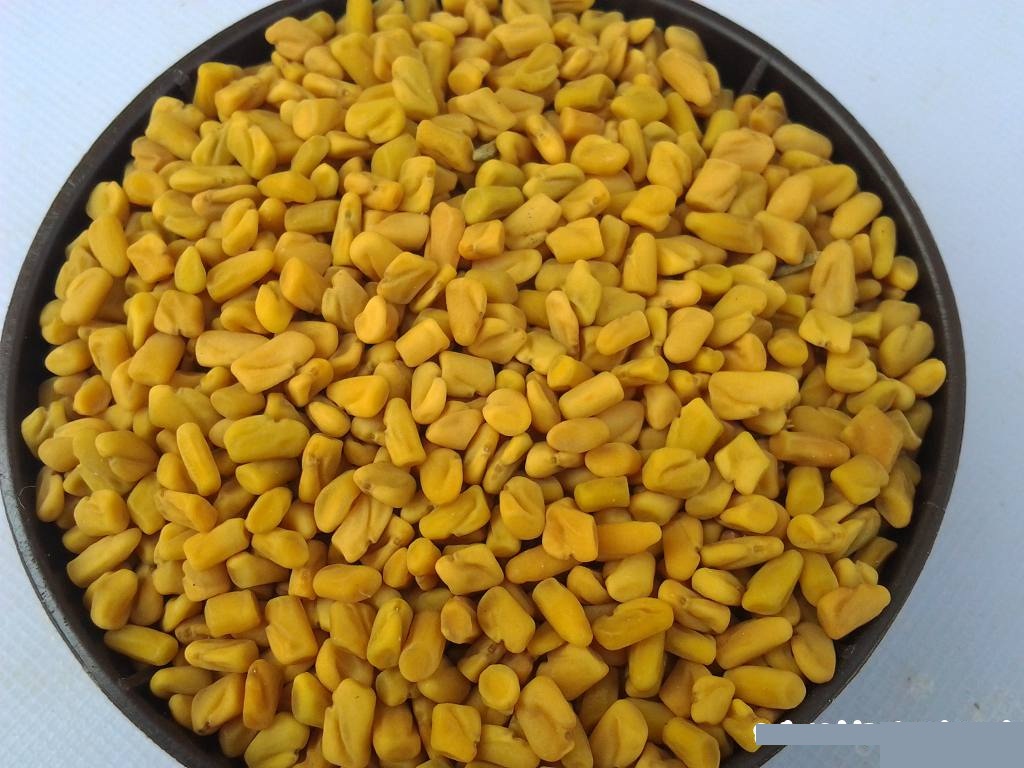
Fenugreek Seeds | Cumin Seeds


Indian spices supply important health edges and contribute towards a personality’s healthy life. They add flavor and nutrients to dishes while not fat or calories! In our everyday use of spices  are Asafoetide, Cumin Seeds, Coriander Seeds, Fenugreek Seeds, Garlic Seeds, Dry Ginger Powder, Turmeric and Chilli. One of the best Indian spices is Fenugreek Seeds (Kasuri Methi). It is brief, upright plant (related to spinach) with oval leaves. The whole plant encompasses a robust, sweet aroma. The mature leaves have the bitter style.  Ground fenugreek (seeds) encompasses a heat, yellowish-brown color with a powerful curry-like style. In pulverized type, fenugreek is one in all the most ingredients of curry powders. Fenugreek is employed to feature flavor to meat dishes. Thought-about it’s additionally thought-about as Associate in nursing aphrodisiac.

Methi or fenugreek seeds and leaves type a crucial ingredient in Indian households. It’s employed in nearly each Indian preparation be it deca litre, paratha or curry. However what you would possibly not apprehend is that methi or fenugreek may be a wealthy reservoir of healthful properties that imparts several health edges.

Fenugreek seeds nutrition facts

  • Fenugreek seeds square measure little, bitter, dicotyledonous seeds of herb fenugreek. Cooked gently, they exhibit powerfully aromatic and pungent flavor. Historically, fenugreek are found use to cure organic process issues and to boost breast milk secretion within the nursing mothers.

Medicinal uses of Fenugreek Seeds

  • Its seeds are employed in several ancient medicines as a laxative, digestive, and as a remedy for cough and respiratory illness.
  • If used frequently, fenugreeks could facilitate management steroid alcohol, lipid similarly as high blood glucose (glycemic) levels in diabetics.
  • Fenugreek seeds added to cereals and flour (bread) or created into porridge, given to the nursing mothers could increase breast milk production.

For more details regarding the spices like Asafoetide, Cumin Seeds, Coriander Seeds, Fenugreek Seeds, Garlic Seeds, Dry Ginger Powder, Turmeric and Chilli please contact us @VarshaIndustries

Coriander Seeds | Cumin Seeds | Fenugreek Seeds


Imagine your food without any spices. Unimaginable, is it? We can easily put it this way; wherever you find an Indian you will find spices. No wonder, when food giants from across the world come to India, they have to add an Indian twist to their menu. In India we many spices available but the major useful in day to day life are Asafoetide seeds, Cumin Seeds, Coriander Seeds, Fenugreek Seeds, Garlic Seeds, Dry Ginger Powder, Turmeric and Chilly.


Right from the kitchen and medicinal uses in homes spices have an important role to play in different places. As India is blessed with a varied climate each of its state produces some spice or the other. No wonder why spices are used so extensively for cooking in India. Not only in India but also in some other countries spices are considered to be of great use.

Apart from adding colour, flavour and taste, consumption of spices provide infinite health benefits. You can be more creative in use of spices if you know its uses better. Some may be a substitute for your costly beauty products and even medicines. Have a quick overview of Indian spices, their uses and benefits

Spices
Uses Benefits
Asafoetida (Hing) It is employed for seasoning food particularly snacks and has healthful uses. A decent remedy for respiratory illness and abdomen ache caused thanks to gas.
Chilli (Lal Mirch) It could be a main ingredient used for adding hot flavour to the food. The antioxidants gift in chili facilitates to deal with cholesterol. It conjointly helps burning calories.
Coriander
Seeds
(Dhaniya)
Coriander leaves additionally as coriander seeds square measure employed in preparation. It conjointly has some healthful uses. It may be used outwardly on aching joints and rheumatism. it’s conjointly smart for addressing pharyngitis, allergies , digestion issues, pollinosis etc.
Cumin
Seeds (Zeera)
It is employed for preparation and it conjointly possesses healthful properties. It a decent supply or iron and keeps system healthy. Water cooked with cumin seeds is sweet for addressing infectious disease.
Fenugreek Seeds
(Methi)
It is principally used as a inexperienced veggie and seeds square measure used for seasoning and getting ready Masalas. It conjointly has healthful uses. Seasoning tea or sweet fudge is sweet for increasing breast milk. It conjointly useful for treating polygenic disorder and lowering cholesterol
Garlic
Dry Powder
(Lassan)
It is employed for preparation additionally as for the healthful purpose. It’s helpful for addressing cough and cold. It conjointly has antibiotic properties.
Ginger Dry Powder (Adrak) It is employed for giving a particular flavour to food and has several healthful uses. Helps to avoid biological process issues. It’s helpful for addressing cough and cold.
Turmeric (Haldi) It is employed in preparation and skin care product. Its big selection healthful uses.
It helps subsume skin issues. Turmeric powder may be used for healing cuts and wounds. It conjointly makes addressing polygenic disorder easier.

Spices are used and from India since ages. Many of these spices like areAsafoetide seeds, Cumin Seeds, Coriander Seeds, Fenugreek Seeds, Garlic Seeds, Dry Ginger Powder, Turmeric and Chilly.

Though these spices offer infinite advantages they must be used slenderly. The excessive use of spices in food will cause hurt to the health. Attempt to create specific use of those spices. This can assist you to create optimum use of the resources provided naturally. Strike the correct balance and add some spice to your life.


We are offering large amount of exports in spices like Asafoetide seeds, Cumin Seeds, Coriander SeedsFenugreek Seeds, Garlic Seeds, Dry Ginger Powder, Turmeric and Chilly.
@VarshaIndustries